


-
Door Weatherstripping & Door Seals
- Weatherstripping
- Door Sweeps
- Automatic Door Bottoms
- Door Shoes
- Door Gaskets
- Meeting Stiles / Astragals
- Garage Door Bottom Seals
- Rain Drips
- INTUMET™/Fire Stop
- Excessive Gap Solutions
- For Metal Doors
- For Glass Doors
- Insert Replacements
-
SAMPLE SYSTEMS
- Sound Seal for Single Door
- Hurricane Protection System
- ADA Compliant Hurricane Protection System
- Air Tight System for Single Door
- System for Equipment Room Doors
- Sound Control for Communicating Doors
- Sound Control for Latching Pocket Doors
- Interior Entry Sealing System, Option 1
- Interior Entry Sealing System Option 2
- Residential System for Exterior Doors
- Exterior Outswing Door Gasket System
-
Door Thresholds, Ramps & Stair Hardware
- All Door Thresholds
- Flat Door Thresholds
- Interlocking Thresholds
- Rubber Seal Thresholds
- Adjustable Door Thresholds
- Threshold For Pre-Hung Doors
- Thermal Break Thresholds
- Rubber Top Thresholds
- Bronze Door Thresholds
- Stainless Steel Threshold
- Half Saddle Thresholds
- Transitional Threshold
- Threshold Ramps
- Stair Tread Nosings
- Carpet Transition Strip / Seam Binding
- Threshold Stop Strips
- Floor Cover Plates
- Customizable Door Threshold
- Threshold Accessories
-
Door Hardware
-
Door Locks, Knobs and Handles
- Door Knobs
- Door Handles
- Smart Locks & Keypads
- Deadbolts
- Mortised Locks
- Handlesets for Front Door
- Door Lock Cylinders and Cores
-
Emtek Door Hardware - Style by Style
- Argos Door Handle Series
- Arts and Crafts Door Handle Series
- Aston Door Handle Series
- Astoria Door Knob Series
- Athena Door Handle Series
- Aurora Door Lever Series
- Basel Door Lever Series
- Beaded Egg, Door Knob, Series
- Belmont, Door Knob, Series
- Bern, Door Knob, Series
- Breslin, Door Handle, Series
- Bristol, Glass Door Knob, Series
- Bryce, Door Lever, Series
- Butte, Door Knob, Series
- Cimarron Lever Series
- Cody Lever Series
- Cologne Lever Series
- Cortina Lever Series
- Coventry Lever Series
- Diamond Crystal Knob Series
- Dresden Lever Series
- Dumont Lever Series
- Durango Lever Series
- Ebony Knob Series
- Egg Knob Series
- Elan Lever Series
- Freestone Knob Series
- Freestone Lever Series
- Geneva Lever Series
- Georgetown Knob Series
- Hammered Egg Knob Series
- Hammered Lever Series
- Hampton Crystal Knob Series
- Helios Lever Series
- Hercules Lever Series
- Hermes Lever Series
- Ice White Knob Series
- Jamestown Knob Series
- Kiel Lever Series
- L-Square Faceted Lever Series
- L-Square Hammered Lever Series
- L-Square Knurled Lever Series
- L-Square Straight Knurled Lever Series
- L-Square Tribeca Lever Series
- L-Square White Marble Lever Series
- Lafayette Lever Series
- Lancaster Knob Series
- Lariat Lever Series
- Laurent Knob Series
- Lowell Crystal Knob Series
- Luzern Lever Series
- Madison Black Knob Series
- Madison Ivory Knob Series
- Mariposa Lever Series
- Medici Lever Series
- Melon Knob Series
- Mercury Lever Series
- Merrimack Lever Series
- Milano Lever Series
- Modern Disc Crystal Knob Series
- Modern Square Crystal Knob Series
- Montrose Lever Series
- Myles Lever Series
- Napoli Lever Series
- Normandy Lever Series
- Norwich Knob Series
- Octagon Knob Series
- Octagon Lever Series
- Old Town Clear Knob Series
- Orb Knob Series
- Padua Lever Series
- Parma Knob Series
- Petal Knob Series
- Poseidon Lever Series
- Providence Crystal Knob Series
- Providence Knob Series
- Ribbon & Reed Knob Series
- Ribbon & Reed Lever Series
- Rope Knob Series
- Rope Lever Series
- Round Knob Series
- Rustic Lever Series
- San Carlos Lever Series
- Santa Fe Lever Series
- Savannah Knob Series
- Sion Lever Series
- Spencer Lever Series
- Spoke Knob Series
- Square Knob Series
- Stuttgart Lever Series
- T-Bar Faceted Lever Series
- T-Bar Hammered Lever Series
- T-Bar Knurled Lever Series
- T-Bar Straight Knurled Lever Series
- T-Bar Tribeca Lever Series
- T-Bar White Marble Lever Series
- Teton Lever Series
- Triton Lever Series
- Turino Lever Series
- Victoria Knob Series
- Waverly Knob Series
- Wembley Lever Series
- Winchester Knob Series
- Windsor Crystal Knob Series
- Yuma Lever Series
- Accentra (Formerly Yale) Locks
- Hager Door Locks
- Falcon Door Locks
- Adams Rite Locks
- Schlage Door Locks
- Door Latches and Door Strikes
-
Door Pulls and Push Bars
- Door Pulls
- Door Push Bars
- Pull Plates
- Push Plates
- Hands Free Door Opener
- Cabinet Knobs and Pulls
-
Rockwood Architectural Door Pulls
- Rockwood Knurled Series
- Locking Door Pull
- Rockwood NeoMetrix Line
- Rockwood NeoMax / NeoTek Line
- Rockwood RightAngles Line
- Rockwood MegaTek / PostMount Line
- Rockwood MegaCurve Line
- Rockwood MezzoTek Line
- Rockwood BandWidth Line
- Rockwood OvalTek Line
- Rockwood Oval Tek Flat Line
- Rockwood NeoMitre Line
- Rockwood NeoCylinder Line
- Rockwood LineaMet Line
- Rockwood LineaTek Line
- Rockwood LineaMax Line
- Rockwood NoirMet Line
- Rockwood NoirTek Line
- Rockwood ArborMet Line
- Rockwood ArborTek Line
- ArborTek Leather Grip
- Rockwood ArborTek Collar Mount Posts
- Rockwood SoftMet Line Door Pulls
- Rockwood SoftTek Line
- Rockwood SkewTek Line
- Rockwood CenTrex Line
- Rockwood CenTrex2 Line
- Rockwood GeoMetek Line
- Rockwood GeoMetek Diamond Line
- Rockwood GeoMetek Hex Line
- Rockwood PlanTek Line
- Rockwood SculpTrex Line
- Rockwood Traditional Line
- Rockwood Classic Line
- Rockwood English Bridle Leather Line
- Rockwood Flush Leather Line
- Rockwood Leather Oval Line Door Pull
- Rockwood Upholstery Leather Line, Door Pull
- Rockwood Upholstery Leather GeoMetek Line
- Rockwood AccenTek Line
- Rockwood AccenTek-Formed Line
- Rockwood MariTek Line
- Rockwood Groove Line
- Rockwood Tubular Line
- Rockwood GripZone
- Santoprene Grip
- Trimco Architectural Door Pulls
- Door and Gate Closers
- Panic Bars
- Electric Strikes
- Electromagnetic Door Locks
- Bolts and Flushbolts
- Aluminum Storefront Hardware
- Gate Locks
- Door Glass, Lite Kits and Door Louvers
- Mounting Bracket
- Door Frame Accessories
-
Door Locks, Knobs and Handles
- Door Accessories
-
Hinges
-
Door Hinges
- All Door Hinges
- Mortise Door Hinges
- Full Surface Door Hinges
- Half Mortise Door Hinges
- Square Barrel Door Hinges
- Half Surface Door Hinges
- Swing Clear Door Hinges
- Anchor Hinges
- Aluminum Door Slip In Hinge
- Detention Hinges
- Hinge Accessories
- Shop Hager Hinges
- Shop McKinney Hinges
- Shop Emtek Hinges
- Shop Deltana Hinges
- Shop Ives Hinges
- Piano Hinges & Barrel Hinges
- Gate Hinges
- Spring Hinges
- Cabinet Hinges
- Glass Door Hinges
- Pivot Hinges
- Invisible Hinges
- Cam Lift Hinges
- Accessories
-
Door Hinges
-
Sliding Doors & Sliding Cabinet Doors
- All Sliding Door Systems
- Barn Door Hardware
- Sliding Glass Systems
- Sliding Door Hardware for Single/Double & Pocket Door
- Pocket Door Hardware & Frames
- Bypass Sliding Doors
- Simultaneous Double Doors
- Steel Sliding Systems
- Bifold Doors Systems
- Sliding Door Hardware for Cabinets, Closets and Furniture
- Self Closing Systems
-
Hettich Grant Sliding Door Systems
- Hettich Grant, Medium Duty Doors
- Hettich TopLine Grant, Med. - HD Doors
- Hettich TopLine Grant SD, 150 LB Doors
- Hettich TopLine Grant HD, 325 LB Doors
- Hettich TopLine Grant XHD, 500 LB Doors
- Hettich SlideLine M for Inset Doors
- Hettich SlideLine M for Overlay Doors
- Hettich Grant Bi-Fold, Light - Med. Duty Doors
- Hettich WingLine L Folding, 55 LB or 25 LB Doors
- Hettich Wingline Grant 1260 Bi-Fold, 175 LB Doors
- Hawa Door Systems
- Sliding Door Parts / Accessories
- Flood Barriers & Door Dam
-
Cabinet Hardware
- Cabinet Locks
-
Cabinet Knobs & Handles
- Cabinet Knobs
- Cabinet Handles and Pulls
- Emtek Cabinet Hardware
-
Shop Schaub Cabinet Hardware
- Armadio Collection
- Artifex Collection
- Aspero Collection
- Atherton Collection
- Avalon Bay Collection
- Baker Collection
- Borde Collection
- Cafe Collection
- Cantata Collection
- City Lights
- Classico Collection
- Colonial Collection
- Corinthian Collection
- Country Collection
- Empire Collection
- Finestrino Collection
- Firenza Collection
- Fonce Collection
- French Court Collection
- French Farm Collection
- Fused Glass Collection
- Haniburton Collection
- Heathrow Collection
- Hinges Collection
- Ice Collection
- Imperial Shell Collection
- Italian Contemporary
- Lumiere Collection
- Lumiere Transitional Collection
- Martello Collection
- Menlo Park
- Modo Collection
- Monza Collection
- Mother of Pearl Collection
- Mountain Collection
- Nature Collection
- Northport Collection
- Positano Collection
- Pub House Collection
- Quadrato Collection
- Regatta Collection
- Sabre Collection
- San Marco Collection
- Siena Collection
- Skyevale Collection
- Sonata Collection
- Sorrento Collection
- Stargaze Collection
- Steamworks Collection
- Stradella Collection
- Suave Collection
- Sunburst Collection
- Tiger Penshell
- Traditional Collection
- Turno Collection
- Urbano Collection
- Versailles Collection
- Vinci Collection
- Wave Collection
- Wine Themes Collection
-
Shop Amerock Cabinet Hardware
- Amerock Davenport Collection
- Amerock Crawford Collection
- Amerock Westerly Collection
- Amerock Wells Collection
- Amerock Abernathy Collection
- Amerock Sea Grass Collection
- Amerock Blythe Collection
- Amerock Allison Value Collection
- Amerock Ashby Collection
- Amerock Blackrock Collection
- Amerock Candler Collection
- Amerock Conrad Collection
- Amerock Oberon Collection
- Amerock Nature's Splendor Collection
- Amerock Kane Collection
- Amerock Carrione Collection
- Amerock Traditional Classics Collection
- Amerock Glacio Collection
- Amerock Granby Collection
- Amerock St. Vincent Collection
- Amerock Esquire Collection
- Amerock Carolyne Collection
- Amerock Inspirations Collection
- Amerock Bar Collection
- Amerock Rochdale Collection
- Amerock Extensity Collection
- Amerock Highland Ridge
- Amerock Revitalize Collection
- Amerock Essential'Z Collection
- Amerock Mulholland Collection
- Shop Deltana Cabinet Hardware
-
Shop Hafele Cabinet Hardware
- Hafele Melange Collection
- Hafele Arcadian Collection
- Hafele Astral Collection
- Hafele Havana Collection
- Hafele Showcase Cornerstone Collection
- Hafele Aztec Collection
- Hafele Crescent Collection
- Hafele Avignon Collection
- Hafele Antimicrobial Collection
- Hafele Beaulieu Collection
- Hafele Bella Italiana
- Hafele Technik Collection
- Hafele Charleston Collection
- Hafele Breakers Collection
- Hafele Cologne Collection
- Hafele Windsor Collection
- Hafele Voyage Collection
- Hafele Americana Collection
- Hafele Wisp Collection
- Hafele Elemental Collection
- Hafele Mulberry Collection
- Hafele Paragon Collection
- Hafele Westin Collection
- Hafele Vogue Collection
- Hafele Tab Collection
- Hafele Pinstripe Collection
- Hafele Keystone Collection
- Hafele Calypso Collection
- Hafele Chelsea Collection
- Hafele Georgia Collection
- Hafele Hewi Collection
- Hafele Fusion Collection
- Hafele Eclipse Collection
- Hafele Studio Collection
- Hafele Aurora Collection
- Hafele Somerset Collection
- Decorative Cabinet Accents
- Cabinet Hinges
- Appliance Pulls
- Drawer Slides
- Shelf Supports and Brackets
- Cabinet Stops, Bumpers and Catches
- Furniture Tools and Accessories
- LED Lights
- Bathroom Accessories
-
Emtek Door Hardware
- Emtek Door Levers
- Emtek Door Knobs
- Emtek Entry Sets
- Emtek Keyed Levers and Knobs
- Emtek Deadbolts
- Emtek Cabinet Knobs and Pulls
- Emtek Appliance Pulls
- Emtek Door Pulls
- Emtek Sliding Door Hardware
- Emtek Hinges
- Emtek Door Stops and Bumpers
- Emtek Misc. Door Accessories
- Emtek Bathroom and Wall Accessories
- Custom Laser Fabrication — Made in the USA
- SHOP BY BRAND
Categories
Testimonials
Finally, I will have a solution to fix my door sweep by replacing the two rubber strips that are worn out. I was unable to find them locally, and am very grateful for this help. It is a custom door with custom stained glass, and I did not want to have to fill and redrill the holes myself for a new sweep.
Deborah Potter
()
Jul 29, 2025
How to Make a Door Flood Barrier: DIY & Flood Protection Options
Feb 3, 2022

Most people don't have to worry about water entering through the front door as a result of some kind of flood. But if a recent experience with flooding or changing weather has you rethinking your home's flood protection, you may be wondering how to make a door flood barrier.
A door flood barrier can help prevent floodwater from entering through a doorway and damaging floors, walls, furniture and other belongings inside your home. Depending on the situation, homeowners can use temporary solutions such as sandbags and flood bags, or install a purpose-built flood barrier designed specifically for doors and entryways.
Even if you don't live in an area that is subject to floods, it's not like you can ever completely avoid the potential of flooding -- rivers and lakes sometimes overflow and a water main can always burst nearby. But if you're not ready to purchase one, you may be interested in how to make a door flood barrier on your own.
In this guide, we'll explain how to make a door flood barrier, the different materials and temporary solutions you can use, how flood barriers work, and when a dedicated door flood barrier may provide better protection than a DIY solution.
How Do You Make a Door Flood Barrier?
If you need a temporary door flood barrier, one of the simplest approaches is to use sandbags or commercially available flood bags around the doorway. These can help create a barrier between rising water and the entrance to your home.
However, DIY flood barriers have limitations. Sandbags are heavy and require considerable time and effort to position correctly. Flood bags are easier to handle, but many are designed for one-time or limited use. For homeowners who regularly face flood risks, a reusable door flood barrier designed to seal against the doorway can be a more convenient option.
In general, your options include:
- Sandbags: A traditional and inexpensive temporary flood barrier.
- Flood bags: Lightweight alternatives that expand when exposed to water.
- DIY barriers: Temporary barriers made from available materials and used when a flood is approaching.
- Reusable door flood barriers: Purpose-built systems designed to fit across a doorway and help prevent water from entering.
The right solution depends on the expected water level, the size and configuration of the doorway, how quickly the barrier needs to be installed, and whether you need a temporary or reusable solution.

Prepare Your Home and Yourself
Before you can think about making a door flood barrier, you'll need to prepare your home. If there is water heading toward your property and you have reason to believe that it may enter the home, your first priority should always be the safety of you and your family.
Floodwater can create serious electrical, structural and contamination hazards. If it is safe to do so, follow guidance from local emergency officials and your utility providers regarding electricity, gas and water. Never enter standing water where electrical hazards may be present.
Beyond preparing your home, you'll also want to prepare an emergency kit for yourself and your family, as well as for your pets. Having important supplies ready before severe weather arrives can help you avoid scrambling for a solution at the last minute.
It is also important to think about the areas where water could enter your home. A front door may be the most obvious opening, but floodwater can also enter through:
- Back and side doors
- Garage doors
- Low-level windows
- Basemen
- Entrances
- Vents and air bricks
- Drains and other low-level openings
Identifying these potential entry points before a storm gives you more time to decide where flood protection is needed.
Use Water Barriers to Prevent Flooding
Once you have prepared yourself and your home, it's time to turn your attention to preventing water from entering through vulnerable openings. Water barriers to prevent flooding come in many different shapes and sizes, but one of the most common temporary solutions is the simple sandbag.
Sandbags
Sandbags are a traditional way to create a temporary barrier against rising water. They are relatively inexpensive and can be effective when properly positioned, making them a common choice when homeowners need a quick flood protection solution.
The problem is that sandbags can also be heavy, bulky and difficult to handle. You need enough bags, enough sand and enough time to place them around the area you want to protect. If a storm is already approaching, finding and transporting enough sandbags can also become difficult.
Sandbags may therefore make sense for certain temporary flood protection situations, but they aren't always the easiest option for protecting a residential doorway.

Flood Bags
If sandbags don't quite meet your needs, you can also consider flood bags. They are lighter and smaller than traditional sandbags, which makes them easier to transport and position around smaller spaces and openings.
Many flood bags use absorbent crystals rather than sand. When they come into contact with water, the material expands and creates a barrier designed to help slow or redirect water.
One important consideration is storage and reuse. Depending on the type of flood bag, the product may remain expanded for an extended period after absorbing water and may not be suitable for repeated testing or immediate reuse.
For homeowners looking for a reusable solution, a purpose-built flood barrier may therefore be worth considering.

See our most popular Dam Easy HydroSack Sandless Flood Bag.
What Can You Use Instead of Sandbags for a Door Flood Barrier?
Sandbags aren't the only way to protect a doorway from floodwater. Homeowners can also use flood bags, temporary water barriers and purpose-built door flood barriers.
The main difference is how each solution is installed, stored and used. Sandbags require significant manual effort and space. Flood bags are easier to handle but may have limitations when it comes to reuse. A dedicated door flood barrier is designed specifically for the doorway, allowing it to be installed when needed without having to build a large pile of bags around the entrance.
Another option is known as a Flood Barrier, which features pods that connect together and provide a physically larger barrier than would be possible with freestanding bags alone.
At the bottom is a watertight gasket base that helps seal the ground underneath the barrier as water pressure increases. Depending on the configuration, these barriers can also allow you to create 90-degree, water-tight angles.
One advantage of a reusable flood barrier is that once the water recedes and the barrier is dry, it can be stored for future use rather than disposing of a large quantity of sandbags.
Don't Forget Other Flood Entry Points
Water doesn't only enter a home through the front or back door. Windows, garages and other openings that are close to ground level can also become potential entry points during a flood.
One area that homeowners may overlook is vents, grates and air bricks. These openings can provide another route for water to enter the property.
Specialty covers and temporary flood protection products can be used to help protect these areas when flooding is expected. The right solution depends on the type, size and location of the opening.
It's also worth looking at the items stored inside your home. Important documents, electronics, furniture and other valuable items should not be left directly on the floor in areas where floodwater could potentially reach them.
Moving important belongings to higher locations can help reduce potential damage if water does enter the property.
Install a Door Flood Barrier
As you can likely see with temporary and DIY solutions, protecting a doorway with sandbags or other makeshift barriers can be time-consuming and difficult. You may need a large number of bags, plenty of storage space and enough time to position everything before the water arrives.
That's why many homeowners looking for reliable flood protection choose a purpose-built door flood barrier. Instead of building a barrier from individual bags, a flood barrier for doors is designed specifically to sit across an entryway and help prevent water from entering through the opening.
A dedicated flood barrier can be particularly useful when a property is located in an area that experiences heavy rain, hurricanes, flash flooding, rising water or other conditions that can put low-level doorways at risk.
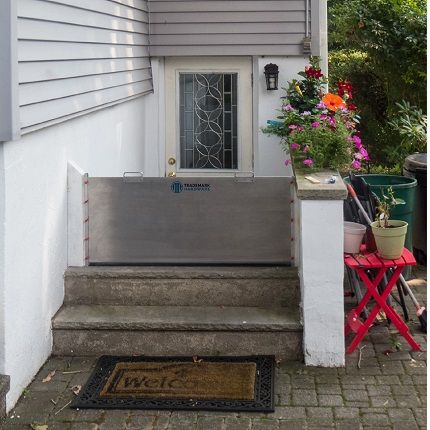
How Does a Door Flood Barrier Work?
A door flood barrier works by creating a physical barrier across an entrance that helps prevent or restrict water from passing through the doorway. Depending on the design, the barrier may sit against the door frame, across the threshold or directly in front of the entrance.
Many systems use a combination of barrier panels, seals, gaskets or other components to create a tighter barrier between the doorway and the surrounding surface.
The goal is simple: stop or slow floodwater before it can enter the building through the door.
Unlike a pile of sandbags, a purpose-built flood barrier is designed around the specific problem of protecting an opening. This can make the setup more organized and easier to manage, particularly when you need protection for multiple doors around a property.
How a Flood Barrier Helps Protect a Door
When floodwater approaches a doorway, the barrier creates a raised obstruction between the water and the entrance. The barrier's base and sealing components help reduce the amount of water that can pass underneath or around it.
The effectiveness of any flood protection system depends on factors such as the product design, installation, surface conditions, expected water level and the particular doorway being protected. A flood barrier should therefore be selected and installed according to the manufacturer's specifications.

DIY Door Flood Barrier vs. a Purpose-Built Flood Barrier
If you're researching how to make a door flood barrier, it's important to understand the difference between a temporary DIY solution and a purpose-built system.
A DIY approach can be useful when you need an emergency solution and have limited options available. Sandbags, flood bags and other temporary materials can help create a barrier around a doorway.
However, a purpose-built flood barrier is designed specifically for flood protection. It can provide a more consistent solution without requiring homeowners to collect, transport and arrange dozens of individual bags every time severe weather is approaching.
| Flood Protection Option | Main Advantage | Potential Limitation |
|---|---|---|
| Sandbags | Low-cost and widely available | Heavy, bulky and labor-intensive |
| Flood Bags | Lightweight and easier to handle | Some products have limited reuse |
| DIY Barrier | Can be assembled using available materials | May be less consistent and time-consuming to install |
| Door Flood Barrier | Designed specifically for protecting doorways | Requires selecting a system suitable for the doorway and conditions |
For occasional flooding, a temporary solution may be enough for some homeowners. If flooding is a recurring concern, however, having a reusable flood barrier ready before severe weather arrives can make flood preparation much easier.
Protect Your Doorway With Door Dam
When Should You Use a Flood Barrier for Your Door?
A flood barrier can be useful whenever a doorway is at risk of becoming an entry point for water. This may include homes and businesses located in flood-prone areas, properties affected by heavy rainfall, and buildings where the entrance sits close to ground level.
You may want to consider flood protection for doors if:
- Your property has experienced flooding in the past.
- Your front, back or side doors are close to ground level.
- Your area experiences heavy rainfall or flash flooding.
- Your property is located in an area affected by hurricanes or tropical storms.
- Water tends to collect around your entrances during severe weather.
- You need a reusable flood protection solution.
- You want to avoid storing and handling large quantities of sandbags.
Even if your home has never flooded before, that doesn't necessarily mean it is completely protected from future flooding. Severe weather, drainage problems, overflowing waterways and unexpected water events can create risks that may not have existed previously.
Flood Barriers for Front, Back and Side Doors
One of the advantages of a dedicated door flood barrier is that flood protection doesn't have to be limited to the main entrance. Water can enter through any low-level doorway that is exposed to flooding.
Depending on the property, you may need protection for a:
- Front door
- Back door
- Side entrance
- Garage entrance
- Commercial entrance
- Basement or lower-level doorway
Before choosing a barrier, measure the opening and determine exactly where the system needs to be positioned. Doorway dimensions, threshold height, surrounding surfaces and the expected flood conditions can all affect which solution is appropriate.

Can a Door Flood Barrier Be Reused?
One of the biggest differences between temporary flood protection products is whether they can be reused.
Traditional sandbags generally need to be emptied, removed and replaced after use. Flood bags may also have limitations depending on the material and design of the product.
Reusable flood barriers are designed with repeated use in mind. Once the flood risk has passed, the barrier can be removed, cleaned or dried according to the manufacturer's instructions, and stored until it is needed again.
This can be particularly useful for homeowners who live in areas where severe weather is seasonal. Instead of purchasing or preparing a new temporary barrier every time a storm approaches, a reusable system can be kept available as part of your emergency flood-preparation plan.
What to Consider When Choosing a Door Flood Barrier
Not every doorway is the same, and not every flood protection system is designed for the same conditions. Before purchasing a flood barrier, consider the following factors.
1. Doorway Width
Measure the width of the doorway where the barrier will be installed. The barrier needs to fit the opening correctly, so accurate measurements are important before selecting a system.
2. Threshold and Ground Surface
Look at the surface directly in front of and underneath the doorway. Concrete, tile, asphalt and other surfaces can have different characteristics, and gaps or uneven areas may affect how a barrier seals.
3. Expected Water Level
Think about how much water you may need to protect against. A barrier intended to handle minor surface water may not be suitable for a situation involving significantly higher floodwater.
4. Installation Time
When severe weather is approaching, installation time matters. A solution that requires hours of preparation may not be practical when flooding can occur quickly.
5. Storage
Consider where you will store the flood protection system when it isn't being used. Sandbags can take up considerable space, while some reusable flood barriers are designed to be stored until they are needed.
6. Reusability
If flooding is a recurring concern, a reusable flood barrier can be more practical than a single-use or disposable solution. Check the manufacturer's instructions to understand how the product should be cleaned, stored and reused.
7. Doorway Configuration
Some properties require protection around corners, multiple connected openings or unusual doorway configurations. In these situations, look for a flood barrier system that can accommodate the layout of the property.
Flood Gates vs. Door Flood Barriers

The terms flood gate and door flood barrier are sometimes used interchangeably, although flood protection systems can vary considerably in design.
A flood gate is generally designed to block or restrict water from passing through an opening, while a door flood barrier is specifically intended to protect a doorway or entrance.
For homeowners, the important consideration isn't necessarily the name of the product. What matters is whether the system is suitable for the size and configuration of the doorway and the type of flooding you are trying to protect against.
A purpose-built system should also be installed according to the manufacturer's instructions rather than treated as a one-size-fits-all solution.
Why a Door Flood Barrier Can Be Better Than Sandbags

Sandbags remain a practical emergency flood protection option, but they aren't always the most convenient choice for protecting individual doorways.
To protect a doorway with sandbags, you may need to purchase, transport and stack a large number of bags. The process can be physically demanding, especially when time is limited and severe weather is already approaching.
A dedicated door flood barrier simplifies the process by giving you a system specifically designed for the opening you want to protect.
Instead of building the barrier one sandbag at a time, you can use a purpose-built solution that is designed to be positioned across the doorway and provide a physical obstruction against incoming water.
That doesn't mean a door flood barrier is automatically the right solution for every property. Sandbags and flood bags still have their place, particularly when a quick temporary solution is required. The best option depends on the property, flood risk and the type of protection needed.
Protect Your Home Before the Water Arrives
One of the biggest mistakes homeowners can make is waiting until water is already entering the property before thinking about flood protection.
If your home is located in an area where flooding is possible, it's better to identify vulnerable entrances and have a plan before severe weather arrives.
That means knowing which doors need protection, measuring the openings, choosing the appropriate flood protection products and keeping those products accessible when you need them.
For homeowners who regularly deal with flooding, a reusable flood barrier can become part of that preparation. Instead of trying to find sandbags or build a temporary barrier at the last minute, you already have a dedicated system available for the doors that need protection.
For additional protection, you can also look at other vulnerable areas around the property, including low windows, garage openings, vents and other low-level entry points.
The goal isn't simply to react when flooding begins. It's to have a flood protection plan in place before the water becomes a problem.
Ready to Protect Your Doorway?
Explore reusable flood barriers designed to help protect doors and other vulnerable entrances from floodwater.
Explore Flood BarriersOur Door Flood Barrier Solution
If you're looking for a reusable solution specifically designed to protect a doorway, Trademark Hardware offers door flood barriers designed to help protect entrances from flooding.
Our flood barrier system uses connected panels and a watertight gasket base to create a barrier across the doorway. The system can also be configured to create 90-degree water-tight angles where the layout of the property requires additional protection.
Because the barrier is reusable, it can be removed after the flood risk has passed and stored for future use.
If you're not sure which solution is right for your property, start by looking at the size and configuration of your doorway, the expected flood risk and how quickly you need to be able to install the barrier.
Shop Flood Barriers for Doors
Ready to protect your home or business from potential flooding? Explore our flood barriers for homes and doors to find a reusable solution for your entrance.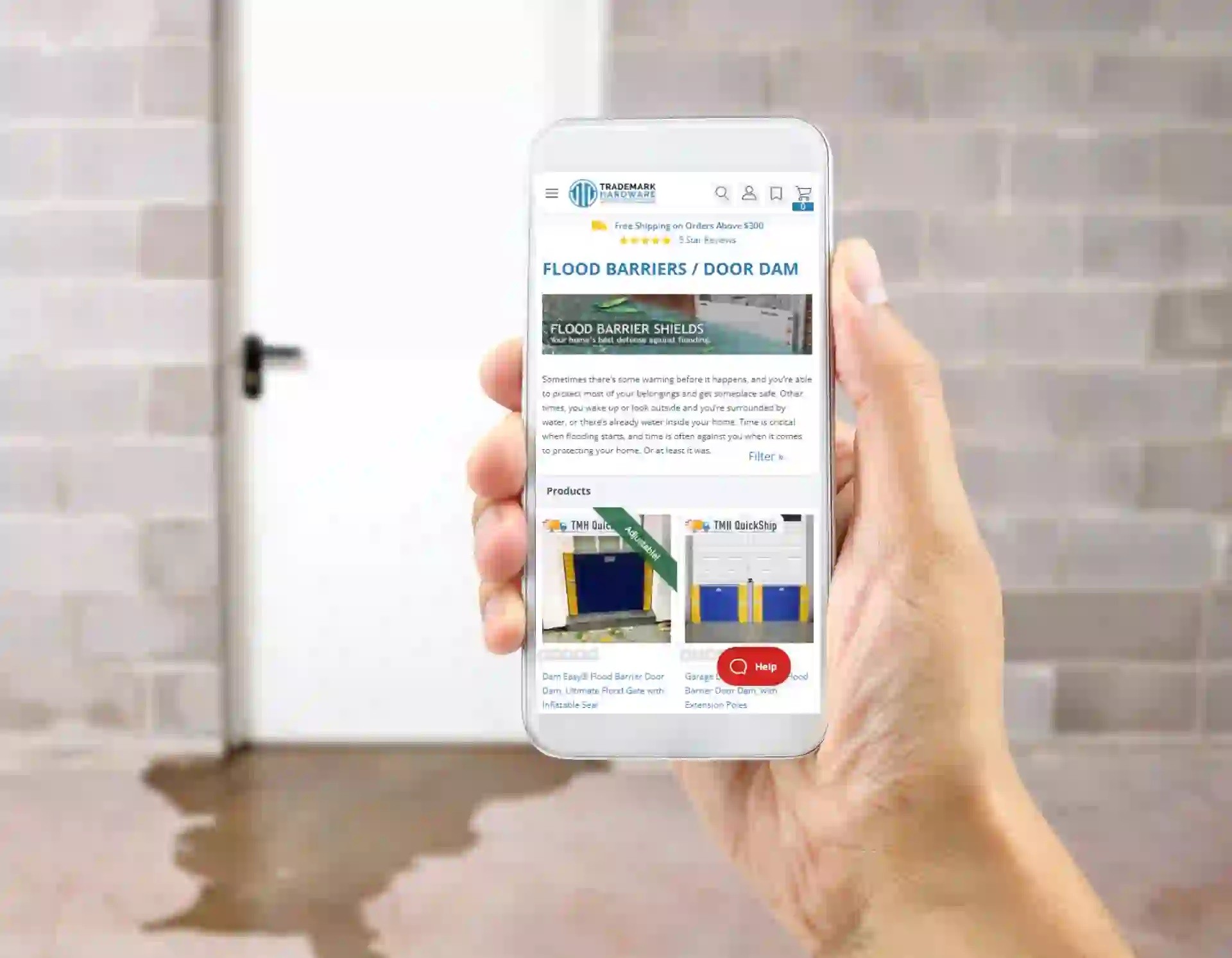
Frequently Asked Questions About Door Flood Barriers
How do I stop flood water from coming through my door?
The most effective way to stop or reduce floodwater from entering through a doorway is to use a flood protection system designed for that opening. Temporary options include sandbags and flood bags, while reusable door flood barriers are designed specifically to create a physical barrier across an entrance.
Before choosing a solution, consider the size of the doorway, the height of the expected water, the surface around the entrance and how quickly the barrier needs to be installed.
What is the best flood barrier for a door?
The best flood barrier depends on the doorway and the level of flood protection required. Sandbags can provide an inexpensive temporary solution, while flood bags are lighter and easier to handle. A purpose-built reusable door flood barrier can be a more convenient option when you need dedicated protection for a doorway and expect to use the system more than once.
What can I use instead of sandbags for flooding?
Alternatives to sandbags include flood bags, water-activated flood barriers and reusable door flood barriers. These options can be easier to transport, store and install than traditional sandbags, depending on the product and the type of flooding you are preparing for.
Can I make a flood barrier myself?
Yes, homeowners can create temporary flood protection using materials such as sandbags and commercially available flood bags. However, a DIY flood barrier may require more preparation, storage space and manual labor than a purpose-built system. For recurring flood risks, a reusable barrier designed specifically for the doorway may be a more practical option.
How do you protect a front door from flooding?
Start by identifying how water could reach the entrance and measuring the doorway. For temporary protection, sandbags or flood bags can be positioned around the entrance. A reusable door flood barrier can provide a dedicated solution designed to sit across the doorway and help prevent water from entering the home.
Do flood barriers really work?
Flood barriers can help prevent or reduce water from entering through protected openings when they are appropriate for the situation and installed correctly. Their effectiveness depends on the design of the barrier, installation, surface conditions, expected water level and other site-specific factors. Always follow the manufacturer's installation and use instructions.
Are door flood barriers reusable?
Some door flood barriers are designed to be reusable. After the flood risk has passed, a reusable system can be removed, cleaned or dried as directed by the manufacturer, and stored for future use. This can make reusable barriers especially useful in areas where flooding is a recurring or seasonal concern.
How do you install a door flood barrier?
Installation depends on the specific flood barrier system. In general, the barrier is positioned across the doorway or entry point and its sealing components are placed against the appropriate surfaces. Always follow the manufacturer's installation instructions and make sure the doorway and surrounding surfaces are suitable for the system before installation.
How high should a flood barrier be?
There is no single flood barrier height that works for every property. The required height depends on the expected flood conditions, the location of the doorway and the design specifications of the barrier. A barrier should be selected based on the manufacturer's rated capabilities rather than choosing a height based only on the size of the doorway.
Are sandbags better than flood barriers?
Sandbags and flood barriers serve different purposes. Sandbags are inexpensive and can be useful for temporary emergency protection, but they are heavy and labor-intensive. A purpose-built flood barrier is designed specifically for flood protection and can be easier to install and reuse, particularly when protecting individual doorways.
Can flood barriers protect garage doors?
Flood protection can also be used for garage entrances, but the appropriate solution depends on the size, design and configuration of the garage opening. Because garage doors are often much wider than standard residential doors, homeowners should choose a system specifically designed and rated for the opening being protected.
What other parts of a home should be protected from flooding?
Doors are only one potential entry point for floodwater. Depending on the property, homeowners should also consider low-level windows, garage entrances, vents, air bricks and other openings close to ground level. Moving valuable items and electronics away from the floor can also help reduce potential damage if water enters the property.
Key Takeaways: How to Make a Door Flood Barrier
If you're trying to figure out how to make a door flood barrier, there are several options available depending on your situation.
- Sandbags can provide a simple and inexpensive temporary barrier.
- Flood bags are generally lighter and easier to handle than traditional sandbags.
- DIY flood protection can work as a temporary emergency measure but may require significant preparation.
- Reusable door flood barriers are designed specifically to protect doorways and can be stored for future use.
- Doorway measurements matter when selecting a flood barrier.
- Surface conditions matter because the barrier needs to be suitable for the area where it will be installed.
- Flood protection should be planned before severe weather arrives, rather than waiting until water is already entering the property.
The best flood protection solution depends on your property, the type of flooding you may experience and the entrance you need to protect. A temporary solution may be enough for an occasional emergency, while a reusable flood barrier can provide a more convenient option for properties with recurring flood risks.
Protect Your Doorway From Flooding
Learning how to make a door flood barrier is a useful starting point for preparing your home for potential flooding. Sandbags, flood bags and other temporary solutions can all play a role in an emergency, but they aren't the only options available.
If you need a dedicated solution for a doorway, a purpose-built flood barrier can make flood preparation easier by providing a system designed specifically for the entrance you need to protect.
Trademark Hardware offers Door Dam flood barriers and other flood protection solutions for homeowners and businesses looking to protect vulnerable entrances from floodwater.
Whether you choose sandbags, flood bags or a reusable door flood barrier, the most important step is to prepare before the water arrives. Identify vulnerable openings, understand your flood risk and have the right protection available when you need it.
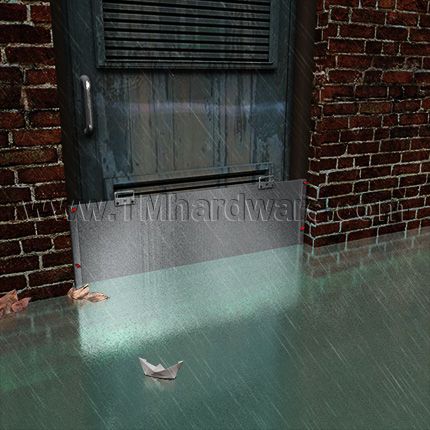
Explore Flood Protection Options
Looking for a reusable way to protect your doorway from floodwater? Explore Trademark Hardware's flood barriers to find a solution for your home or property.
